
The opening story and the two business examples below are illustrative scenarios, not verified ERPixel client cases.
Imagine the chaos starting with one simple question: “Where did we put those connectors?”
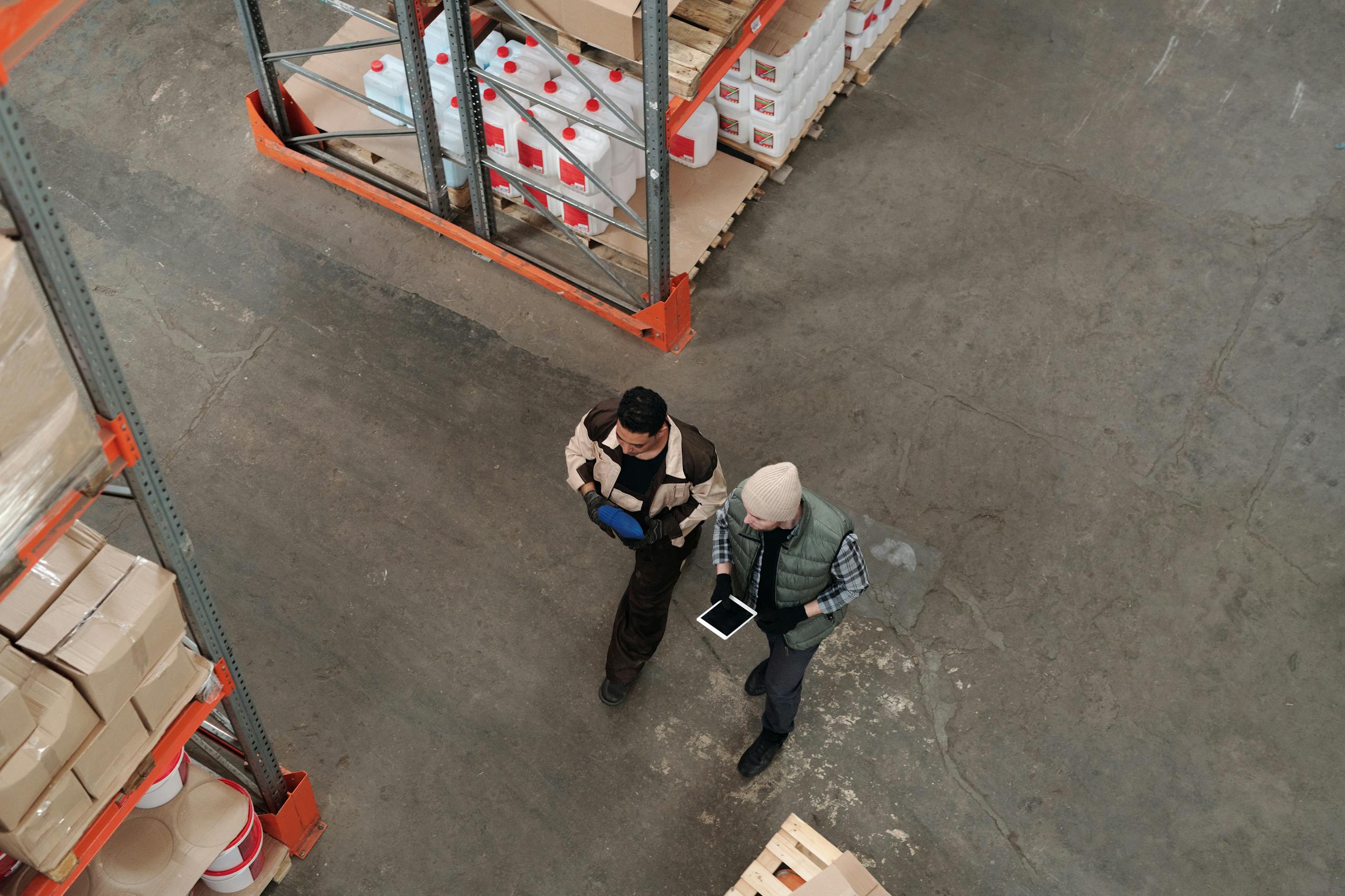
The purchasing manager was sure they had been received. The warehouse operator walked from pallet to pallet, opening boxes, scanning labels, refreshing Odoo – nothing. Orders were waiting, staff were frustrated, and everyone blamed “the system.”
In this illustrative scenario, reviewing the setup reveals a location-design problem rather than an Odoo software fault. The company was receiving everything into a single generic stock location, with no clear aisles, no shelves, and no Odoo 19 putaway rules. Products arrived, but Odoo had no logic for where to store them – and the warehouse team spent hours every week hunting for items that should have been easy to find.
This article walks through, in practical business terms, how to structure warehouse locations in Odoo 19 and how to use putaway rules so products are placed automatically in the right aisle and shelf. The key question we’ll answer is: How should you design locations and putaway rules in Odoo 19 so that anyone can instantly know where every item is stored?
Key Warehouse Terms in Odoo 19
Before diving into configuration, it helps to align on a few core terms used in Odoo’s inventory app.
- Warehouse – A physical or logical building where you store goods.
In Odoo, a warehouse (for example, “Main”) groups default locations likeMain/Input,Main/Stock, andMain/Output.
Example: Your central distribution center is configured as the “Main” warehouse in Odoo. - Location – A specific place where products can sit. Locations can be internal storage, supplier locations, customer locations, or virtual ones.
Example:Main/Stock/Aisle 1/Shelf 1represents a real shelf in your rack system. - Storage Location – An internal location intended for long-term storage, not just movement.
Example:Main/Stockand all its child aisles and shelves are storage locations. - Input / Output Locations – Temporary “staging” areas for receipts and deliveries, not where products should live long term.
Example:Main/Inputis where goods appear when you receive them, before putaway. - Putaway Rule – A rule that recommends a destination location when a product reaches a specified warehouse location. Rules can match a package type, product, or product category.
Example: A rule can direct Product X arriving inMain/StocktoMain/Stock/Aisle 1/Shelf 1. - Routes & Inventory Routing – The rules and operation steps that control how products move between suppliers, receiving areas, storage, production, and customers. Multi-step routes are relevant when a warehouse separates receiving, storage, picking, packing, or shipping into distinct operations; a basic putaway rule does not by itself require a custom route.
Example: A two-step receipt moves goods into an input area before the storage transfer.
Why Putaway Rules Matter: Two Illustrative Business Scenarios
Location structure and putaway rules are a foundation for consistent inventory work. When they are missing or poorly designed, the operational impact appears in receiving, picking, replenishment, and production.
Example 1: Electronics Distributor
A mid-size electronics distributor receives hundreds of SKUs every week. Without a detailed structure under Main/Stock and without Odoo 19 putaway rules explained to the team, staff simply drop pallets “anywhere there’s space.” Odoo only sees a generic Main/Stock.
The result: stock is technically “on hand” in the system, but nobody knows which aisle or shelf to visit. Picking slows down, urgent orders are delayed, and the company starts over-ordering “just in case” because they don’t trust the numbers.
Example 2: Industrial Components Manufacturer
A manufacturing company stores raw materials, subassemblies, and finished goods in the same warehouse. Components for production must move from storage to the line at the right time.
Without structured internal locations like Main/Stock/Raw/Aisle 1 and without robust putaway rules, materials regularly end up in wrong zones. Production stops while operators search for missing parts. The planning team sees “available” inventory in Odoo, but the floor team can’t find it. Lead times rise, and customers feel it.
In both cases, the root cause is the same: no clear location hierarchy and no rules to drive automatic putaway during receipts.
Putaway Troubleshooting: Compare the Expected and Actual Destination
Before validating a test transfer, compare its suggested destination with the rule and the actual warehouse flow. The checks below follow Odoo 19’s documented putaway rules and storage category behavior.
| Expected → actual destination | Rule or limitation to inspect | What to verify |
|---|---|---|
| A shelf was expected; the transfer still points to the parent stock location. | Arrival location and Store to hierarchy. | Check that the operation reaches the rule’s When product arrives in location and that Store to is its child location. In a multi-step receipt, inspect the storage transfer as well as the initial receipt. |
| A product rule was expected; a package-related destination appears. | Priority of matching rules. | Compare the product, category and package type on the transfer with all matching rules. Package type + product, package type + category and package type take priority over product-only and category-only rules. |
| A new shelf was expected; Odoo suggests the previous shelf or Store to. | Sublocation = Last Used. | Review the last location associated with the product or category. With no previous location, Last Used falls back to Store to; it does not select a new shelf solely because one exists. |
| A category-controlled bin was expected; the suggestion is the parent Store to. | Closest Location eligibility and fallback. | Check Having Category, the category assigned to child locations, capacity and Allow New Product. When eligible closest locations are full, Odoo uses Store to. If the product has a weight, check that Max Weight is greater than zero. |
| Incoming stock was expected to fill several bins; all quantity is assigned to one. | No automatic quantity split across locations. | Compare receipt quantity with available capacity. Split quantities into separate detailed-operation lines and choose the required locations; verify the recorded quantities after validation. |
| Package capacity was expected to control placement; package rules are unavailable or do not match. | Packages setting, package type and category capacity. | Enable Packages, confirm the actual package type and review Capacity by Package. Retest with the packaging used on the real receipt rather than a product-only test. |
Use a test product and an agreed starting stock position. Record the expected destination, the suggested destination before validation, and stock by location afterwards. A correct suggestion still needs the operator to confirm the physical placement.
From Chaos to Clarity: How to Design Locations and Putaway Rules in Odoo 19
The following sequence connects the documented Odoo 19 behavior with practical warehouse-design checks. Start with the real physical flow, configure the smallest useful location hierarchy, then test the destination suggested on an actual receipt.
1. Enable Storage Locations and Confirm the Required Flow
Go to Inventory → Configuration → Settings and enable Multi-Step Routes; Odoo 19 automatically activates Storage Locations with it, as described in the official putaway configuration guide. Storage Locations provides the hierarchy needed for aisles, shelves, or bins; Multi-Step Routes matters when the warehouse uses separate input, stock, output, pick, pack, or ship operations.
Do not add steps merely to make putaway work. Confirm whether the real receipt is one step, two steps, or three steps, then model only the locations and operations that users will actually process.
2. Create a Warehouse and Understand Its Default Locations
Review the warehouse under Inventory → Configuration → Warehouses. The central internal storage location is typically Main/Stock. Input and output staging locations appear when the warehouse is configured for the corresponding multi-step incoming or outgoing flows.
Main/Stock– central internal storage and the parent for practical storage sublocations.Main/Input– an incoming staging location when the configured receipt flow uses one.Main/Output– an outgoing staging location when the configured delivery flow uses one.
Staging locations are movement zones rather than long-term shelf addresses. Build the physical aisle, shelf, or bin hierarchy under the appropriate internal storage location.
3. Build a Location Hierarchy That Mirrors the Real Warehouse
A clean location tree in Odoo should match the reality your staff see on the floor.
A simple pattern is:
- Under
Main/Stock, create an internal location called Aisle 1. This tells Odoo that it’s a real physical area. - Under Aisle 1, create another internal location called Shelf 1.
You now have a clear hierarchy: Main/Stock » Aisle 1 » Shelf 1.
This can be extended naturally: Aisle 2, Shelf 3, Bin 5, and so on.
The more your naming convention reflects warehouse signage and labels, the easier it is for staff to trust and use Odoo in daily operations.
4. Configure Putaway Rules to Drive Automatic Storage
Go to Inventory → Configuration → Putaway Rules and create the narrowest rule that matches the storage decision.
- When product arrives in – the parent location where Odoo evaluates the rule, such as
Main/Stock. - Package Type, Product, or Product Category – the item or packaging condition that the rule matches. Leave product fields empty only when the destination genuinely applies to all products reaching that location.
- Store to – the destination location, which must be a sublocation of the arrival location for the rule to apply correctly.
- Sublocation – use No for the exact Store to location, Last Used to suggest the last relevant sublocation, or Closest Location with a required Having Category storage category.
Odoo’s storage categories documentation explains how categories can constrain locations by weight, product quantity, or package capacity and help Closest Location choose among eligible sublocations. Treat the result as a destination recommendation to verify on the transfer. Odoo 19 does not automatically split an incoming quantity across multiple locations when the first suggested location would exceed capacity; split detailed operations manually when the receipt must be distributed.
5. Understand Putaway Rule Priority
The documented Odoo 19 priority order evaluates matching rules from most specific to least specific:
- Package type and product
- Package type and product category
- Package type
- Product
- Product category
If a receipt suggests an unexpected destination, review the full set of matching rules in this order before changing the warehouse route or overriding the destination manually.
6. Test with Real Transactions – Don’t Skip This Step
Test using a full purchase-to-receipt flow.
- Create a test product and confirm there is no existing stock.
- Create a purchase order for this product, targeting the Main warehouse.
- Receive the product, open the detailed operations, and inspect the suggested Destination before validation.
- Validate the receipt, then review the product's stock by location to confirm that the quantity moved to the approved aisle or shelf.
Compare the suggested destination with the rule's arrival location, matching condition, Store to location, and any higher-priority rule. If capacity or packaging requires more than one destination, split the detailed operations explicitly and confirm the result after validation.
7. Plan for the Next Steps: Flows Between Locations and Warehouses
Once your basic location hierarchy and putaway rules are stable, you can safely extend into more advanced flows:
- Moving raw materials from storage to production lines
- Transferring components between internal locations
- Returning finished goods back into stock
- Inter-warehouse transfers and internal replenishment
- Cross-company moves that still keep stock accurate in Odoo
This is where working with an official Odoo Partner such as ERPixel helps you design routes and locations that scale beyond a single warehouse and avoid future rework.
Conclusion: A Simple Structure, Backed by Smart Rules
To answer the key question: you design locations and putaway rules in Odoo 19 by building a clear warehouse hierarchy under Main/Stock and using the narrowest applicable rule to recommend the destination. Enable storage locations, model only the required receipt flow, and inspect the suggested destination before validation.
When Odoo 19 putaway rules are configured correctly, warehouse staff receive a consistent destination suggestion. After users verify and validate the transfer, stock by location shows the recorded aisle or shelf.
If your warehouse team needs practical instruction across locations, receipts, transfers, routes, and inventory controls, review ERPixel's Odoo Inventory training for warehouse teams. If you are designing or changing the warehouse architecture itself, plan an Odoo implementation around the real locations, flows, data, user roles, and acceptance tests.