

Work in progress (WIP) is the value of goods that are still in production at the end of an accounting period. In Odoo 18, the manufacturing order records consumed components, operations, time and production output; how those costs appear in inventory valuation and accounting depends on the company's configuration and accounting policy.
Terminology
Work-In-Progress (WIP) represents the value of goods still in production at the end of a period. Several terms are essential for understanding manufacturing accounting in this context:
- Cost of Goods Manufactured — the total costs associated with producing finished goods, including materials and labor.
- Stored Goods — items in stock that are ready for sale or further use in production.
- Production Costs — the costs incurred for raw materials, labor, and other expenses during various stages of the manufacturing process.
Why WIP matters in manufacturing accounting
Companies with long production cycles need to distinguish partly produced goods from finished stock and current-period expenses. Without a defined WIP and inventory-valuation approach, operational manufacturing data and financial reporting can tell different stories. Odoo 18 provides the manufacturing and valuation records needed for this analysis, but the accounting result depends on the costing method, inventory-valuation settings, product categories, accounts, localization and company policy.
Example
Consider a brewery process where raw materials go through multiple stages, including malting, mashing, lautering, boiling, and cooling. Each stage requires specific resources and time. Raw materials, such as malt, may already be consumed while the final product — beer — is not yet ready. WIP treatment helps the finance team interpret those accumulated production costs before finished goods are completed, provided the manufacturing and accounting configuration reflects the company's chosen policy.
How to review WIP-related costs in Odoo 18
The practical starting point is an Odoo Manufacturing workflow that captures the inputs used to calculate manufacturing-order costs. Review the process in this order:
- Define the Bill of Materials (BoM). Record the components and quantities required for the product. Component costs contribute to the expected and real manufacturing-order cost.
- Configure operations and work centers. Define the production sequence, expected duration and work-center cost so that the expected cost reflects the planned process.
- Review employee cost inputs. Where employee time is recorded against work orders, verify the applicable hourly cost and actual duration. These values can contribute to the real operation cost.
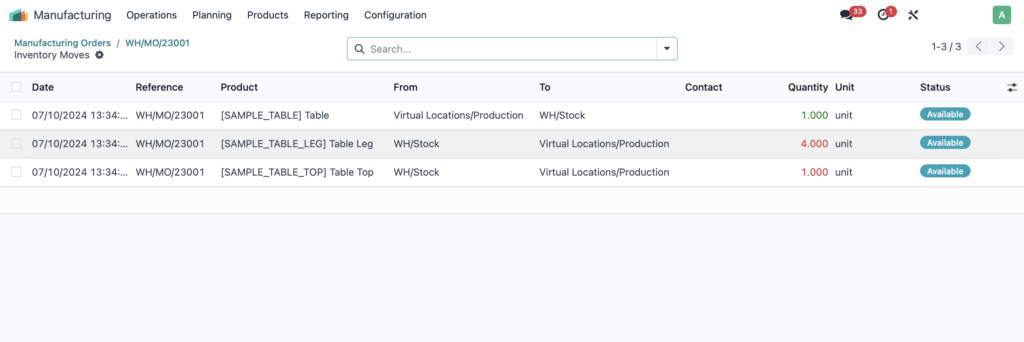
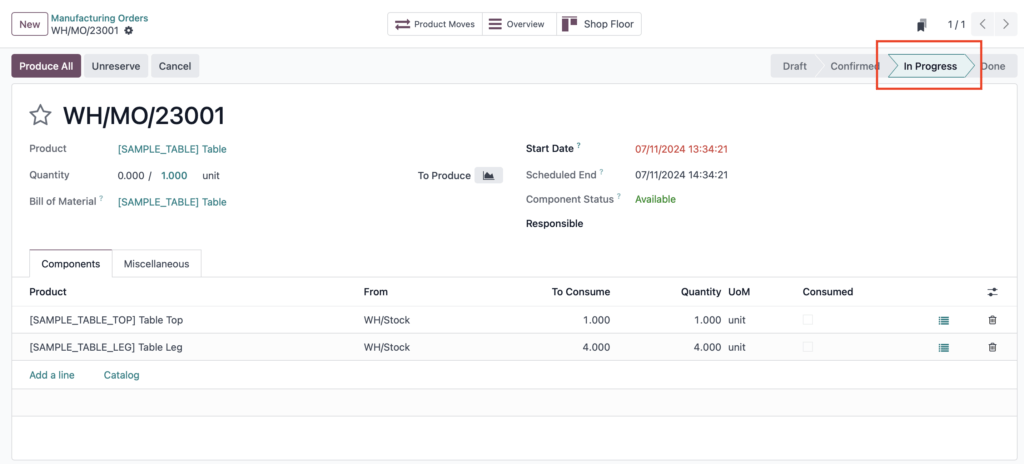
- Create and process the manufacturing order. Select the BoM, confirm component availability, record actual consumption and complete operations as production progresses.
- Compare expected and real cost. Odoo calculates an expected manufacturing-order cost from the BoM and planned operations, while real cost reflects recorded component consumption, operation duration and relevant employee cost.
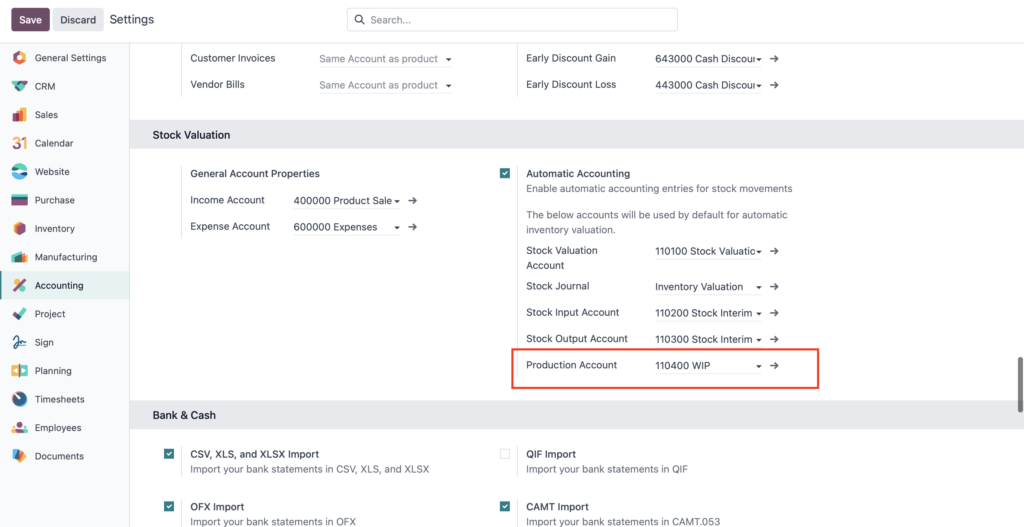
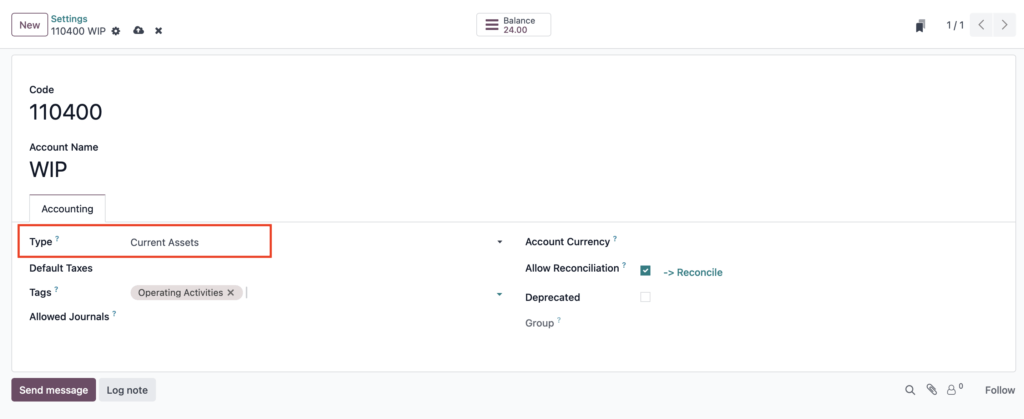
- Validate inventory valuation and accounts. Confirm the product category, costing method, manual or automated inventory valuation, stock valuation accounts and any WIP-specific accounting design with the finance team. Journal entries are not identical for every Odoo setup or localization.
What to verify before relying on the figures
- BoM component quantities and current component costs;
- operation sequence, expected duration and work-center rates;
- actual employee time and hourly cost where employee costs are recorded;
- actual material consumption and completed production quantities;
- costing method, inventory-valuation mode, product-category accounts and localization;
- reconciliation between manufacturing records, stock valuation and the finance team's reporting policy.
This article is an operational overview of Odoo 18 manufacturing costs and WIP-related configuration, not jurisdiction-specific accounting advice. Test the complete workflow with your accountant or finance lead before relying on it for period-end reporting.
Conclusion
WIP analysis is most useful when production, stock valuation and finance use consistent inputs. Odoo 18 can compare expected and real manufacturing-order costs from components and operations, while the accounting treatment must be verified against the company's valuation settings and policy. For a broader view of how production connects with inventory, procurement and finance, see ERPixel's approach to manufacturing software and automation.
Need to align Odoo manufacturing costs, inventory valuation and finance? Discuss your workflow with ERPixel.