

A founder of a growing distribution company recently faced a familiar problem. Sales were rising, warehouse mistakes were increasing, and the finance team was still reconciling numbers in spreadsheets every Friday evening. The team wanted an ERP system, but the options felt overwhelming. Odoo looked modern, affordable, and flexible. Still, one question stopped the decision: what are the real PROS and CONS of Odoo ERP for a company that plans to grow?
That question matters because ERP is not just software. It becomes the operational backbone of your company. Choose well, and your teams work faster with cleaner data. Choose poorly, and you may face expensive rework, frustrated employees, and a system you outgrow too soon.
The Odoo Terms Decision-Makers Should Understand
Before comparing the PROS and CONS of Odoo ERP, it helps to clarify the language used around the platform.
- ERP: Enterprise Resource Planning software connects core departments such as sales, accounting, inventory, purchasing, and manufacturing. Example: a sales order automatically updates stock levels and creates an invoice.
- Modular ERP: A system built from separate applications that can be activated gradually. Example: a company starts with CRM and invoicing, then adds inventory later.
- Open-source software: Software with accessible code that allows deeper configuration and development. Example: a business customizes a delivery workflow instead of waiting for a standard feature.
- Low-code configuration: Adjusting forms, fields, and workflows with limited technical coding. Example: a manager adds a custom approval field to purchase orders.
- Total cost of ownership: The full long-term cost, including licenses, hosting, development, support, training, and upgrades. Example: a free starting plan becomes more expensive after adding users and apps.
Why the Choice Is Bigger Than a Software Demo
The PROS and CONS of Odoo ERP become visible only when mapped against real business processes. A clean interface during a demo is useful, but it does not prove the system can handle every operational detail.
Example 1: A B2B eCommerce distributor
A wholesale distributor selling through an online portal needs synchronized inventory, pricing rules, customer accounts, and invoicing. Odoo can be attractive here because its eCommerce, CRM, inventory, and accounting apps work together. If the company ignores ERP fit, it may continue overselling products, manually correcting invoices, and losing customer trust.
Example 2: A complex engineered-to-order manufacturer
A manufacturer producing customized industrial equipment has complicated bills of materials, project costing, supply chain constraints, and production planning needs. In this situation, the PROS and CONS of Odoo ERP must be examined carefully. If Odoo requires heavy customization to match complex processes, the company may face delays, budget growth, and operational risk.
Where Odoo Shines and Where It Needs Careful Evaluation
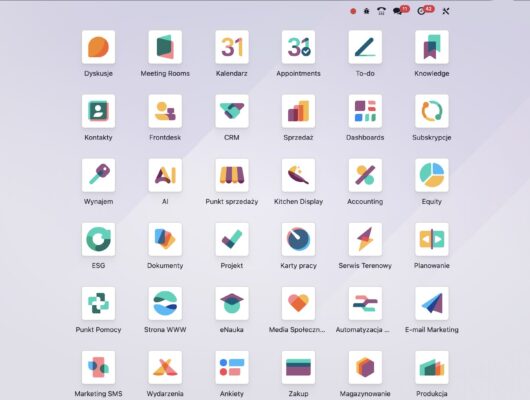
Odoo has become one of the most discussed ERP platforms in the market because it combines simplicity, modularity, and a fast-growing ecosystem. For many small and mid-sized businesses, the PROS and CONS of Odoo ERP often start with usability.
One major advantage is the clean user experience. Odoo feels lighter than many traditional ERP systems. Employees can usually understand the interface quickly, which reduces resistance during adoption. This matters because even powerful ERP software fails when users avoid it.
Another strength is its modular structure. A business does not have to implement everything on day one. It can begin with sales, CRM, accounting, inventory, or eCommerce, then expand gradually. This approach is especially helpful for companies moving from QuickBooks, Excel, disconnected apps, or manual workflows.
The open-source nature of Odoo is also important. It gives companies more flexibility than many closed ERP platforms. With the right implementation partner, businesses can adjust workflows, add custom fields, build integrations, and automate repetitive tasks. ERPixel, as an official Odoo Partner, helps companies turn that flexibility into stable business processes rather than uncontrolled customization.
However, the PROS and CONS of Odoo ERP also include limitations. Odoo is intentionally straightforward compared with enterprise systems such as SAP, Oracle, or Microsoft Dynamics 365. That simplicity is useful for standard operations, but it may become restrictive for multinational companies, highly regulated environments, or extremely complex manufacturing models.
Cost is another area that requires discipline. Odoo can look inexpensive at the beginning, especially when a company starts with a limited set of apps. But costs can increase as more users, modules, hosting options, integrations, support, and custom development are added. The initial subscription is only one part of the financial picture.
This is why the smartest Odoo projects begin with process analysis, not software enthusiasm. A company should define what must stay unique, what can be standardized, and which workflows are causing measurable business pain. Then the team can decide whether Odoo should be configured, customized, integrated with another system, or avoided for a specific requirement.
For many businesses under roughly $50 million to $100 million in revenue, Odoo can be an excellent first ERP system. It often fits companies with standard accounting, inventory, CRM, eCommerce, purchasing, or light manufacturing needs. It is especially effective when leadership is willing to improve processes rather than replicate every spreadsheet habit inside a new platform.
The most successful implementations treat Odoo as a business transformation platform, not only an IT project. That means involving department leaders, cleaning master data, training users early, and planning phased adoption. When done correctly, the PROS and CONS of Odoo ERP become easier to manage because expectations are realistic from the start.
A Practical Way to Decide
To evaluate the PROS and CONS of Odoo ERP, leaders should ask five practical questions:
- Are our processes mostly standard, or highly specialized?
- Do we need a complete ERP now, or can we implement modules in phases?
- What will the full cost look like after users, apps, support, and development?
- Can our team adapt workflows to fit best practices?
- Do we have an experienced Odoo implementation partner?
If the answers point toward standardization, modular rollout, and manageable complexity, Odoo deserves serious consideration. If the answers reveal extreme process complexity, heavy compliance demands, or advanced planning needs, the company should perform a deeper fit-gap analysis before committing.
So, Is Odoo the Right ERP for You?
The answer is not universal. The PROS and CONS of Odoo ERP show that Odoo is powerful for growing companies that want flexibility, usability, modular implementation, and integrated operations. It is less ideal when a business needs very advanced enterprise functionality from day one.
For companies replacing spreadsheets, disconnected tools, or basic accounting software, Odoo can create a strong foundation for growth. The key is understanding both the advantages and the constraints before implementation begins.
If you want to assess the PROS and CONS of Odoo ERP for your specific operations, contact ERPixel. Our team provides Odoo development, ERP implementation, integrations, and automation services to help you choose, configure, and scale Odoo with confidence.